
Call For Paper
Pen & Prosperity ( Erstwhile Multidisciplinary journal) is now a Bi-Monthly Journal of Social Science (Upto Dated: December-2025)
INDEXED II OPEN ACCESS II PEER REVIEWED II REFEREED JOURNAL II SOCIAL SCIENCES II BI-MONTHLY ll SCHOLARLY II INTERNATIONAL JOURNAL ll DOI: Prefix 10.7098
We are a Social Sciences journal; we welcome submissions from any and all areas of study in the following fields: Social Science, Education, History, Geography, Political Science, Economics, Commerce, Sociology, Philosophy, Anthropology, Law/Legal Studies, Psychology, Management, Public Administration, Music, Fine Arts, Home Management, Linguistics, Social Work









DOI: Prefix 10.7098

Open Access

ISO

Google Scholar 7.025
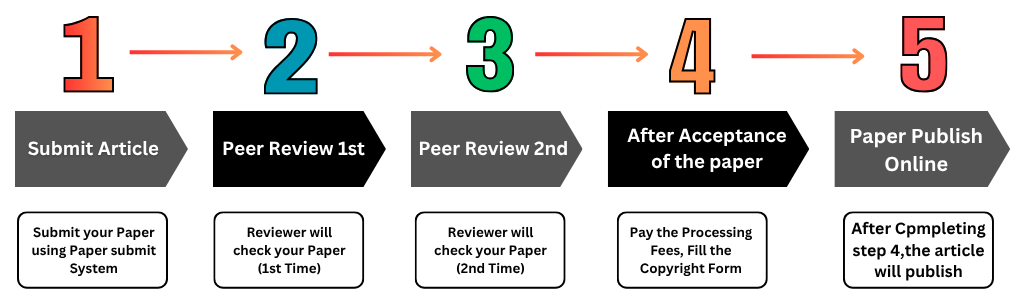
PUBLICATION PROCESS
Fllow this steps and publish your Research Paper
Current Issue
Author: Anwesha Acharya & Dr. Rashmi Raikumar
DOI Link: https://doi.org/10.70798/PP/030400001
Abstract: Arthur Miller’s All My Sons (1947) is a powerful modern American drama that examines the complex relationship between individual identity, social expectations, family responsibility, and moral consciousness. Set in the aftermath of the Second World War, the play presents the Keller family as a microcosm of a society struggling to reconcile private interests with collective responsibility. Joe Keller constructs his identity around the ideals of economic success, family loyalty, and social respectability, yet his involvement in the production and shipment of defective aircraft engine parts exposes the moral contradictions underlying that identity. Chris Keller, in contrast, struggles to develop an identity based on idealism, responsibility, and the values of the war generation. The conflict between Joe and Chris therefore reflects a larger tension between individual self-interest and social morality. Kate Keller’s identity is similarly shaped by denial, grief, and her desperate attachment to the belief that Larry is still alive, while Ann Deever must confront the social consequences of her father’s actions and the stigma attached to her family. Through these characters, Miller demonstrates how identity is socially constructed and how individuals struggle when personal desires conflict with ethical responsibility. The present article critically examines society, identity, family relationships, moral responsibility, and individual struggle in All My Sons, arguing that Miller transforms a domestic tragedy into a broader critique of American social values and the consequences of placing private interests above collective human responsibility.
Keywords: Arthur Miller, All My Sons, Identity, Society, Individual Struggle, Moral Responsibility, American Drama.
Page No: 1-9
Author: Dr. Pankaj Kumar Mandal
DOI Link: https://doi.org/10.70798/PP/030400002
Abstract: The formation of the Bharatiya Jana Sangh (BJS) in 1951 marked a significant moment in the political history of independent India. Established under the leadership of Dr. Shyama Prasad Mukherjee, the party emerged as an alternative political force representing a distinctive vision of nationalism, cultural identity, economic development, and national integration. At a time when the Indian National Congress dominated political life, the Jana Sangh sought to provide a platform for those who believed that India’s civilizational heritage should occupy a central position in the country’s political discourse. This article examines the origins of the Bharatiya Jana Sangh, the ideological foundations of its formation, Dr. Mukherjee’s political philosophy, and his enduring legacy in Indian public life. It argues that Mukherjee’s contribution extended beyond the creation of a political party; he helped shape a long-term ideological movement that influenced the development of Indian politics in the decades that followed.
Keywords: Bharatiya Jana Sangh, Shyama Prasad Mukherjee, Indian Nationalism, Political History, Hindu Nationalism, National Integration, Bharatiya Janata Party
Page No: 10-16
Author: Anwita Ishwar & Dr. Savita Mishra
DOI Link: https://doi.org/10.70798/PP/030400003
Abstract: The goal of education is to foster growth in both people and communities. Life Skills Education as defined by the UNICEF (2005) is “a behaviour change or behaviour development approach designed to address a balance of areas; knowledge, attitude and skills.” Life Skills education is a programme that promotes positive health choice, making informed decisions, practicing health behaviour, recognizing and avoiding risky situations and behaviour. Life skills education is the dissemination and teaching of relevant knowledge, Attitudes, values and social and psychological skills to an individual to enable him/her develop their full potentials.The purpose of this research is to evaluate how different demographics, such as gender, academic standing, and region, influence teachers’ perspectives towards life skill education. For this purpose, the researcher has taken sample of 60 teacher educators from 4 colleges from Siliguri. “Data were collected by self-developed questionnaire. The questionnaire consisted of 36 items with the response of 1= strongly disagree, 2 = Disagree, 3 = Agree and 4= Strongly agree. Collected data were analyzed in SPSS 20 version software. Descriptive statistics and t test have used for hypothesis testing”. Findings of the study indicated that there is no significant difference in the attitude towards life skill education in respect of gender, category and living place.
Keywords: Living Place, Teaching, Life Skill Education, Secondary School Teachers.
Page No: 17-23
Author: Gouranga Ghorai & Dr. Ramjee Singh Yadav
DOI Link: https://doi.org/10.70798/PP/030400004
Abstract: Teacher professionalism and competency are fundamental to the quality and effectiveness of education. In West Bengal, teachers work within a diverse educational environment that includes government, government-aided, private, and teacher education institutions. Changes in curriculum, educational technology, assessment practices, inclusive education, competency-based learning, and professional expectations have increased the need for teachers to continuously develop their professional knowledge and skills. The present article reviews the concepts of teacher professionalism and competency and examines their significance within the educational context of West Bengal. The article considers professional knowledge, pedagogical competence, ethical practice, communication, classroom management, assessment literacy, digital competency, reflective practice, professional commitment, collaboration, and continuous professional development as major dimensions of teacher competency. It also discusses institutional and contextual factors affecting teacher professionalism, including working conditions, professional autonomy, leadership, workload, professional development opportunities, and institutional support. Existing research suggests that teacher competency is closely connected with job satisfaction, professional development, institutional climate, and professional commitment. The article argues that strengthening teacher professionalism requires more than improving individual teacher skills; it requires supportive institutional environments and continuous opportunities for professional learning. The article concludes with suggestions for improving teacher professionalism and competency through systematic professional development, mentoring, research engagement, technology integration, collaborative learning, supportive leadership, and effective professional standards.
Keywords: Teacher Professionalism, Teacher Competency, Professional Development, Teacher Education, West Bengal, Teacher Educators, Professional Ethics, Teaching Effectiveness.
Page No: 24-36
Author: Dr. Pankaj Kumar Paul
DOI Link: https://doi.org/10.70798/PP/030400005
Abstract: The rapid expansion of digital technologies has transformed the landscape of educational research. Digital learning platforms, artificial intelligence, online surveys, learning analytics, social media, virtual environments, and large-scale digital datasets have created new possibilities for generating and analysing educational evidence. At the same time, these developments have introduced methodological, ethical, technological, and professional challenges for educational researchers. This qualitative study examines the changing nature of educational research in the digital age, with particular attention to emerging methodologies, ethical challenges, and researcher competencies. A qualitative documentary research design was employed using scholarly literature, research-methodology publications, policy documents, and international frameworks concerning digital research, artificial intelligence, learning analytics, research ethics, and research capacity. Four objectives guided the analysis: examining emerging methodologies in digital educational research; analysing opportunities created by digital technologies; identifying methodological and ethical challenges; and suggesting competencies required by contemporary educational researchers. The findings indicate that digital technologies have expanded the possibilities of mixed methods, online qualitative inquiry, learning analytics, digital ethnography, computational analysis, artificial intelligence-assisted research, and multimodal data analysis. However, questions concerning informed consent, privacy, data ownership, algorithmic bias, digital exclusion, researcher competence, reproducibility, and responsible use of artificial intelligence remain significant. The study argues that technological proficiency alone is insufficient for contemporary educational researchers. Researchers require methodological flexibility, digital literacy, statistical and qualitative analytical competence, ethical awareness, critical AI literacy, interdisciplinary understanding, and strong reflexivity. The study concludes that the future of educational research lies not in replacing conventional research approaches with digital technologies but in developing ethically grounded, methodologically pluralistic, and critically informed research practices.
Keywords: Educational Research; Digital Research; Research Methodology; Artificial Intelligence; Research Ethics; Researcher Competencies; Digital Education.
Page No: 37-45